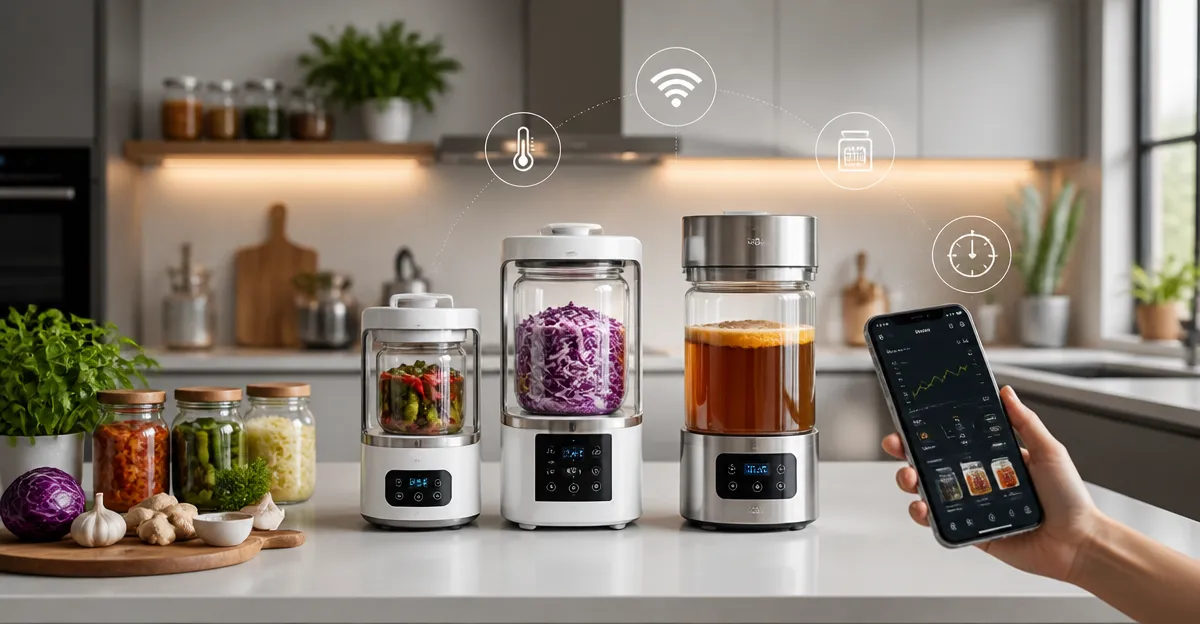
How to Integrate Fermentation Appliances into Your Smart Kitchen: The Complete Guide
Introduction
Modern kitchens are evolving from simple cooking spaces into interconnected ecosystems that support health, sustainability, and convenience. This guide explains how to incorporate dedicated fermentation appliances into a smart kitchen environment. Readers will learn foundational concepts, evaluate key product categories, compare leading devices, and receive actionable best‑practice tips. By the end of the article, one will be able to select appropriate equipment, connect it to existing smart‑home platforms, and maintain optimal fermentation outcomes.
Background and Context
Fermentation is a biochemical process in which microorganisms such as bacteria, yeast, and molds transform sugars into acids, gases, or alcohol. Traditional methods rely on ambient temperature and manual monitoring, which can lead to inconsistent results. Smart fermentation appliances provide precise temperature control, automated timers, and data logging, thereby reducing variability and improving probiotic content. Understanding temperature ranges, humidity requirements, and the role of CO2 release is essential before integrating any device.
In a connected kitchen, appliances can communicate with voice assistants, mobile applications, and energy‑management systems. This integration enables remote monitoring, scheduled operation, and automated alerts when a batch reaches its target parameters. The following sections explore these concepts in detail.
Key Concepts and Strategies for Smart Fermentation
Effective integration begins with three core concepts: temperature precision, fermentation monitoring, and workflow automation. Temperature precision ensures that yogurt, kombucha, kimchi, and other cultures develop at their optimal range. Monitoring involves tracking time, pH, and CO2 levels, often through built‑in displays or companion apps. Workflow automation connects the appliance to a broader smart‑home routine, such as turning on a ventilation fan when CO2 levels rise.
When selecting appliances, consider the following criteria:
- Temperature range and increment control – Devices that allow 1°F or 1°C adjustments provide greater flexibility for temperature‑sensitive cultures.
- Capacity – Choose a size that matches batch volume without overcrowding jars.
- Smart presets and manual modes – Presets simplify common recipes, while manual control accommodates experimental batches.
- Connectivity – Some appliances offer Bluetooth or Wi‑Fi for app‑based guidance, even if the app does not directly control the hardware.
- Accessory compatibility – Lids, weights, and proofing boxes complement the primary appliance and enhance consistency.
Recommended Products and Their Role in a Smart Kitchen
The following products have been selected based on their technical specifications, user ratings, and relevance to a connected fermentation workflow.
FermentPro Smart Yogurt Maker
The FermentPro Smart Yogurt Maker offers a 12.8 L interior, temperature control from 50 °F to 115 °F, and post‑fermentation cooling. Five smart presets simplify yogurt, kombucha, kimchi, tempeh, and sourdough production. Users benefit from a digital timer that can be set from 1 hour to 30 days, making it suitable for both rapid and long‑term fermentations. The unit holds up to one gallon of product, and a four‑way view window allows visual monitoring without opening the lid. With a rating of 4.6 / 5.0 from 45 reviews and a price of $349.99, it represents a premium, all‑in‑one solution for serious home fermenters.
MLGB 6L Fermenter
The MLGB 6L Fermenter provides a compact 6 L stainless‑steel chamber capable of yogurt, fruit wine, kimchi, black garlic, and natto production. Temperature can be set between 33 °C and 45 °C, and timers range from 4 to 24 hours. Its smart constant‑temperature system ensures even heating, while a BPA‑free construction meets food‑safety standards. Priced at $141.63 with a 4.4 / 5.0 rating from 1,175 reviews, it is an affordable alternative for users who do not require the larger capacity of the FermentPro.
Mfacoy Mason Jar Fermentation Lids
The Mfacoy Mason Jar Fermentation Lids are silicone caps featuring a one‑way valve that releases CO2 without manual burping. An integrated date‑track dial helps users identify fermentation progress at a glance. Made from BPA‑free silicone, they are dishwasher‑safe and fit standard wide‑mouth Mason jars. With a rating of 4.6 / 5.0 from 270 reviews and a price of $9.99, they provide a low‑cost method to prevent jar explosions and maintain anaerobic conditions.
SOLIGT Fermentation Weights
The SOLIGT Fermentation Weights are lead‑free glass pieces with an ergonomic bulge handle. Their weight keeps vegetables submerged beneath brine, reducing the risk of surface mold. Each weight fits comfortably in wide‑mouth Mason jars, and the glass material does not absorb odors. Priced at $14.99 with a 4.6 / 5.0 rating from 6,374 reviews, they are a durable accessory for consistent lacto‑fermentation.
InnovifyHub Bread Proofing Box
The InnovifyHub Bread Proofing Box offers a temperature range of 50 °F to 130 °F, a built‑in 24‑hour timer, and an audible alarm. Its compact footprint accommodates a 5 L mixing bowl or multiple Mason jars, making it suitable for starter maintenance, yogurt, or small‑batch tempeh. Energy‑efficient heating is controlled by an NTC sensor, and the unit includes overheat protection. With a rating of 4.5 / 5.0 from 249 reviews and a price of $59.99, it serves as a versatile, space‑saving addition to any smart kitchen.
Comparison and Selection Guide
Choosing the right fermentation appliance depends on batch size, desired food types, and integration depth. The table below summarizes key attributes.
| Feature | FermentPro Smart Yogurt Maker | MLGB 6L Fermenter | InnovifyHub Proofing Box |
|---|---|---|---|
| Capacity | 12.8 L (up to 1 gal) | 6 L | 5 L chamber |
| Temperature Range | 50‑115 °F (10‑45 °C) with 1 °F increments | 33‑45 °C (91‑113 °F) with 1 °C increments | 50‑130 °F (10‑54 °C) |
| Smart Presets | 5 presets for yogurt, kombucha, kimchi, tempeh, sourdough | Manual mode; preset programs for black garlic, wine, yogurt | Timer only; manual temperature set |
| Connectivity | Free companion app (guides only, no direct control) | No dedicated app; relies on manual settings | No app; simple digital interface |
| Price (USD) | 349.99 | 141.63 | 59.99 |
| Average Rating | 4.6/5 (45 reviews) | 4.4/5 (1,175 reviews) | 4.5/5 (249 reviews) |
For users who require large‑scale, multi‑ferment capabilities and appreciate preset automation, the FermentPro Smart Yogurt Maker is the optimal choice. Home hobbyists focusing on black garlic, fruit wine, or smaller yogurt batches may find the MLGB 6L Fermenter more cost‑effective. Those primarily interested in proofing dough, maintaining starters, or using a compact device should consider the InnovifyHub Bread Proofing Box.
Best Practices and Tips for Seamless Integration
- Plan Power and Network Placement – Position appliances near a reliable power outlet and, if applicable, within range of your Wi‑Fi network. Use surge protectors to safeguard sensitive electronics.
- Standardize Containers – Pair the FermentPro or MLGB units with wide‑mouth Mason jars equipped with Mfacoy Fermentation Lids and SOLIGT Weights. This combination prevents accidental pressure buildup and ensures consistent submersion.
- Utilize the Companion App for Guidance – Although the FermentPro app does not control the hardware, it provides step‑by‑step recipes and troubleshooting tips. Follow the recommended temperature profiles for each culture to maximize probiotic yield.
- Integrate with Voice Assistants – Create routines in Alexa or Google Home that announce when a timer completes. For example, a routine can announce, “Your kombucha batch has finished its 7‑day cycle.”
- Monitor Ambient Conditions – Even with precise internal temperature control, extreme kitchen humidity or drafts can affect fermentation. Use a hygrometer inside the proofing box or fermenter chamber to maintain optimal moisture levels.
- Schedule Maintenance – Set calendar reminders for cleaning cycles. Stainless‑steel interiors of the MLGB Fermenter and silicone lids of the Mfacoy caps benefit from weekly sanitation to prevent cross‑contamination.
- Document Results – Keep a digital log of batch dates, temperatures, and sensory notes. Over time, this data can be correlated with app recommendations to refine future batches.
Frequently Asked Questions
- What temperature is ideal for homemade yogurt?
- Most yogurt cultures thrive at 110 °F (43 °C). The FermentPro Smart Yogurt Maker allows precise 1 °F adjustments, enabling exact replication of this range.
- Can I use the FermentPro for sourdough starter maintenance?
- Yes. The device includes a sourdough preset and a post‑fermentation cooling mode that prevents over‑proofing of the starter.
- Do the Mfacoy lids require any special cleaning?
- They are dishwasher‑safe. Rinse them thoroughly after each use to remove residual brine and prevent odor retention.
- How do SOLIGT weights compare to homemade stone weights?
- Glass weights are non‑porous, lead‑free, and have a uniform mass, providing more reliable submersion than irregular stone pieces that may absorb flavors.
- Is the InnovifyHub Proofing Box suitable for fermenting kombucha?
- It can maintain the required temperature range, but it does not include a CO2 vent. For kombucha, pairing the box with Mfacoy lids or a separate airlock is recommended.
- Can I control the MLGB Fermenter remotely?
- The current model does not feature Wi‑Fi or Bluetooth connectivity; all settings are adjusted manually via the built‑in control panel.
- What safety features prevent overheating?
- Both the FermentPro and InnovifyHub units incorporate automatic overheat protection sensors that shut down heating when temperature exceeds the set limit.
Conclusion
Integrating fermentation appliances into a smart kitchen enhances consistency, reduces manual effort, and expands culinary creativity. By understanding temperature dynamics, selecting appropriate accessories, and leveraging automation tools, home chefs can produce probiotic‑rich foods with confidence. The products highlighted in this guide—FermentPro Smart Yogurt Maker, MLGB 6L Fermenter, Mfacoy Mason Jar Lids, SOLIGT Fermentation Weights, and InnovifyHub Bread Proofing Box—represent a spectrum of capabilities that cater to both beginners and advanced fermenters. Applying the best‑practice recommendations will ensure safe, reliable, and delicious results for years to come.
Products Featured in This Guide
FermentPro Smart Yogurt Maker
Price: $349.99 | Rating: 4.6/5 (45 reviews)
Featured for its large 12.8 L capacity, precise 1 °F temperature control, multiple fermentation presets, and post‑fermentation cooling that together enable professional‑grade results in a home kitchen.
MLGB 6L Fermenter
Price: $141.63 | Rating: 4.4/5 (1,175 reviews)
Featured for its versatile temperature and time controls, stainless‑steel interior, and ability to produce yogurt, black garlic, fruit wine, and more at an affordable price point.
Mfacoy Mason Jar Fermentation Lids
Price: $9.99 | Rating: 4.6/5 (270 reviews)
Featured for their one‑way valve that eliminates manual burping, integrated date‑track dial, and food‑grade silicone construction that together ensure safe, mess‑free fermentations.
SOLIGT Fermentation Weights
Price: $14.99 | Rating: 4.6/5 (6,374 reviews)
Featured for their lead‑free glass construction, ergonomic bulge handle, and reliable weight that keeps vegetables submerged, preventing surface mold during lacto‑fermentation.
InnovifyHub Bread Proofing Box
Price: $59.99 | Rating: 4.5/5 (249 reviews)
Featured for its compact 50‑130 °F temperature range, built‑in 24‑hour timer, and energy‑efficient NTC sensor, making it ideal for starter maintenance, small‑batch yogurt, and dough proofing in limited kitchen spaces.